Understanding St. Petersburg's Unique Soil Composition
St. Petersburg sits on some of Florida's most distinctive geology. Unlike inland areas with clay-heavy soil, our region is built on sand and shell fill that was deposited over thousands of years. This composition creates a foundation that looks solid on the surface but behaves very differently than the compacted clay or rock found in other parts of the country.
When you dig just a few feet down in St. Petersburg, you'll encounter layers of fine sand mixed with crushed shells and coral fragments. This material drains water quickly and shifts more easily than traditional soil. For homeowners planning to install Concrete Driveways, understanding this sandy soil composition is critical because it directly affects how well a concrete slab will settle and perform over time.
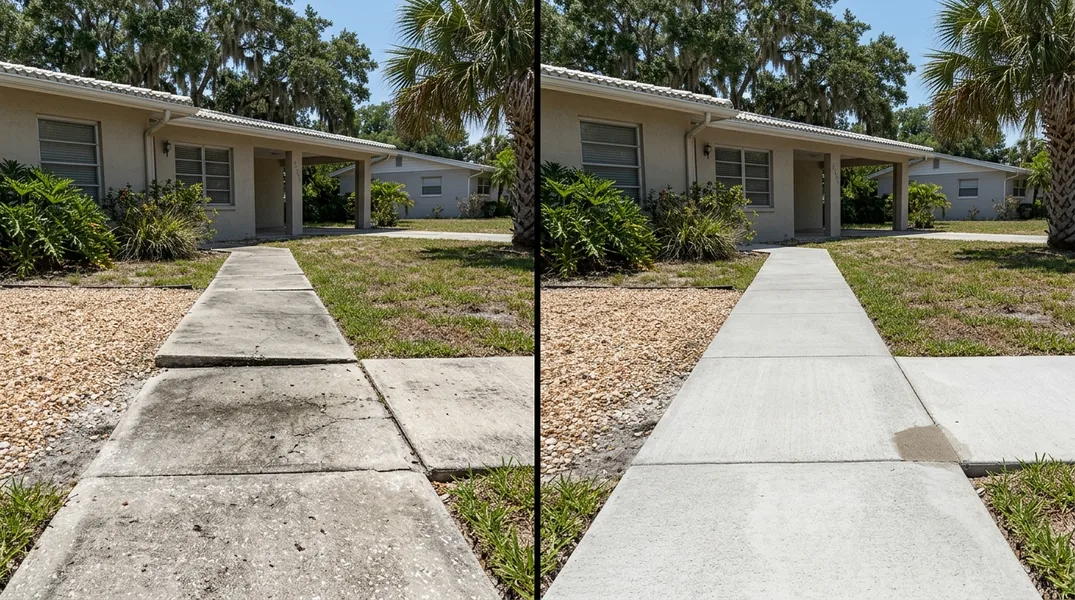
The shell fill component adds another layer of complexity. While shells provide some structural benefit, they're irregular in shape and size, making it harder to achieve uniform compaction. A poorly compacted base layer can lead to uneven settling, which is one of the most common reasons homeowners call for Concrete Repair & Resurfacing services within just a few years of installation.
How Sandy Soil Concrete St. Petersburg Behaves Differently
Sandy soil concrete in St. Petersburg experiences movement patterns that are distinctly different from concrete poured in other regions. Sand particles are much smaller and rounder than clay, which means they don't lock together as tightly. When moisture moves through sandy soil, it can shift and settle unevenly, creating stress points in the concrete above it.
The primary issue homeowners face is differential settling. One section of a concrete slab may sink slightly while an adjacent section remains stable, creating a lip or step in the surface. This isn't just a cosmetic problem; it's a structural concern that can worsen over time. Water pools in the low spots, accelerating deterioration and creating safety hazards. Many property owners in the area discover these problems within two to five years and reach out to professionals for assessment and repair options.
Another concern specific to sandy soil is the lack of lateral support. Sand doesn't provide the same stabilizing force that clay or compacted gravel does. This means concrete slabs in sandy areas are more prone to edge cracking and corner breaks, especially under the weight of vehicles on Concrete Driveways. The concrete essentially flexes more, and that constant micro-movement eventually leads to visible cracks and surface deterioration.
The High Water Table Challenge and Concrete Settling Florida
One of the most significant factors affecting concrete in our region is Florida's notoriously high water table. In many areas of St. Petersburg, the water table sits only a few feet below the surface. This means groundwater is constantly present beneath your concrete, and seasonal changes can push it even closer to the surface during heavy rains or hurricane season.
When groundwater rises beneath a concrete slab, it creates hydrostatic pressure pushing upward against the concrete. This pressure can cause several problems: moisture seepage through the slab, weakening of the concrete base, and accelerated settling. The combination of sandy soil and high water table creates what professionals call a 'mobile foundation' scenario. The soil below your concrete is literally saturated and shifting, making it nearly impossible for a concrete slab to remain perfectly level without exceptional preparation and materials.
Concrete settling Florida is a widespread issue, and the high water table is the primary culprit. Even well-constructed slabs can experience noticeable settlement within a decade. Homeowners often notice this as a gradual tilt in their driveway or patio, water pooling in low spots, or cracks radiating outward from stress points. Professional contractors in the area understand that fighting gravity and hydrostatic pressure requires proper base preparation, superior drainage solutions, and sometimes post-installation monitoring to catch problems early.
High Water Table Concrete Slab: Prevention and Proper Installation
If you're planning to install new concrete in an area with a high water table, prevention is far more cost-effective than repair. A high water table concrete slab requires specialized installation techniques that go beyond standard practices. The foundation preparation is critical. Professional contractors will excavate deeper than typical, remove poorly draining sandy soil, and replace it with compacted fill material that resists water penetration and settling.
Proper drainage is non-negotiable. Many high-quality installations include a perimeter drain system that diverts groundwater away from the slab. Some contractors also recommend a moisture barrier or vapor retarder beneath the concrete to reduce water migration from below. These additions increase initial pricing but dramatically extend the lifespan of your concrete and prevent costly repairs down the road.
The concrete mix itself also matters. In areas prone to moisture and settling, contractors should specify a concrete mix with lower water-to-cement ratios and air entrainment to improve durability. Thicker slabs perform better in these conditions because they're more resistant to flexing and cracking. For Concrete Patios and driveways in high water table zones, a minimum thickness of five to six inches is recommended, compared to the standard four inches used in more stable soil conditions.
Concrete Repair St. Petersburg FL: When Your Slab Shows Problems
If your existing concrete is already showing signs of settling, cracking, or uneven surfaces, professional assessment is your first step. Concrete Repair & Resurfacing in St. Petersburg offers several solutions depending on the severity and cause of the damage. Minor cracks can be sealed to prevent water infiltration and further deterioration. Larger cracks or uneven sections may require mudjacking, a process where material is injected beneath the slab to lift and level it.
For more severe settling or structural issues, full replacement may be necessary. When that time comes, the opportunity exists to address the underlying soil and drainage problems that caused the original failure. This is why many homeowners choose to work with experienced local contractors who understand the specific challenges of building on sandy soil with a high water table. They can design a solution that lasts significantly longer than a standard installation.
If you've noticed cracks, settling, or uneven surfaces in your driveway or patio, don't wait for the problem to worsen. Contact St. Petersburg Concrete at (727) 491-2239 or request a free estimate to discuss your specific situation. Our team understands the local soil and water conditions and can recommend the best repair or replacement strategy for your property.
Planning New Concrete in St. Petersburg: What You Should Know
When you're ready to invest in new Concrete Driveways, Concrete Patios, or Stamped & Decorative Concrete, the foundation preparation phase is where your project's long-term success is determined. Many homeowners focus on the visible concrete surface and aesthetics, but savvy property owners know that what happens below ground matters far more in our region.
Work with contractors who conduct proper soil testing and site assessment before beginning any project. They should evaluate drainage patterns, water table depth, and soil composition to design an appropriate foundation system. Ask about their experience with sandy soil and high water table conditions specifically. Contractors familiar with our local geology will automatically specify proper base materials, thickness, and drainage solutions without you having to request them.
Budget for quality base preparation and drainage. This investment upfront will save you thousands in premature repairs. When comparing pricing between contractors, understand what's included in their base preparation. The cheapest option isn't the best value if it means your concrete will fail within five years. St. Petersburg Concrete brings decades of local experience to every project. Contact us at (727) 491-2239 or visit our website to discuss your concrete needs and get a free estimate that accounts for our region's unique soil and water conditions.
Looking for a professional concrete contractor in St. Petersburg? St. Petersburg Concrete responds fast for all your concrete needs.
Get a Free QuoteOur services: Concrete Driveways · Concrete Patios · Stamped & Decorative Concrete