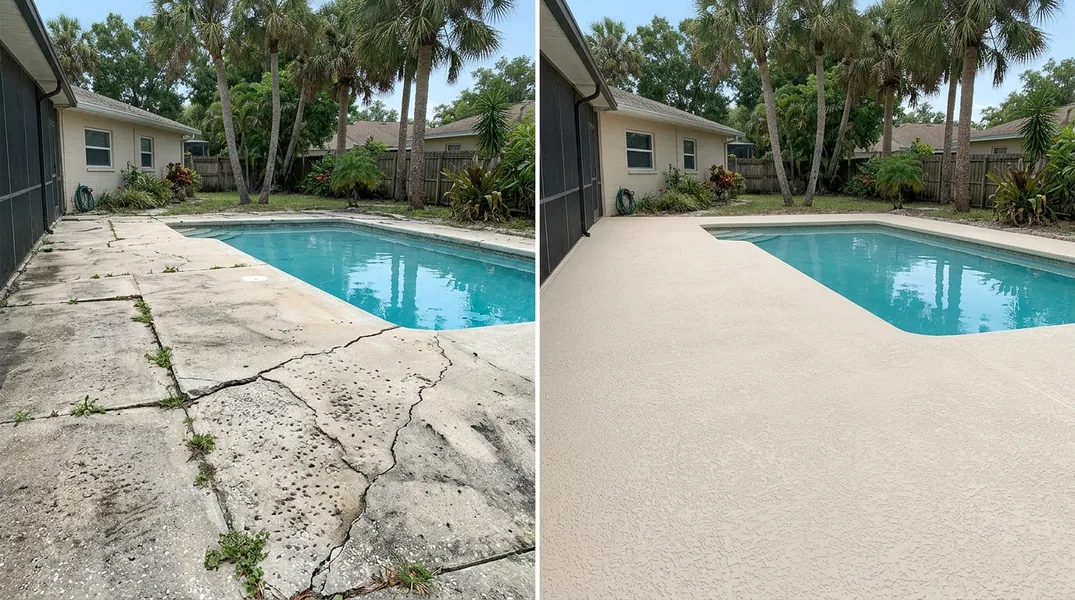
Concrete vs. Pavers: The Key Differences
When you're planning a new driveway or pool deck in St. Petersburg, one of the biggest decisions you'll face is choosing between concrete and pavers. Both materials have been trusted by homeowners across Florida for decades, but they offer distinctly different benefits and drawbacks. Understanding these differences is essential before you commit to a major investment in your property.
Concrete Driveways are poured as a single, solid surface, creating a seamless and uniform appearance. Pavers, on the other hand, are individual units (typically made of concrete, brick, or stone) that are laid out in patterns to create the finished surface. This fundamental difference affects everything from installation time to long-term maintenance, and it's worth exploring both options thoroughly before making your decision.
Durability and Longevity in Florida's Climate
St. Petersburg's subtropical climate presents unique challenges for any outdoor surface. The intense sun, frequent rain, salt air, and occasional freeze-thaw cycles can take a toll on both concrete and pavers, but in different ways. Concrete is incredibly durable when properly installed and sealed, often lasting 25 to 30 years or more with minimal maintenance. However, the constant UV exposure and moisture in our region can cause concrete to crack, fade, and develop surface deterioration over time.
Pavers also perform well in Florida's climate, with individual units typically lasting 20 to 25 years. One advantage of pavers is that if a single unit cracks or becomes damaged, you can replace just that one piece rather than resurfacing an entire section. This modularity can extend the life of your pool deck or driveway significantly. However, the sand or polymeric sand between the pavers can shift and wash away, requiring periodic maintenance to keep the surface stable and level.
Maintenance Requirements: What You'll Actually Do
If you're considering Concrete Patios or driveways, maintenance is a realistic consideration. Concrete requires sealing every two to three years to protect against moisture penetration, UV damage, and staining. You'll also need to sweep regularly, wash the surface occasionally, and address any cracks promptly with Concrete Repair & Resurfacing to prevent them from spreading. In St. Petersburg's humid environment, algae and mold can develop on concrete surfaces, requiring periodic cleaning.
Pavers demand more hands-on maintenance overall. Beyond regular sweeping and washing, you'll need to inspect the sand between pavers, re-sand as needed (typically every few years), and check for any units that have settled or shifted. Weeds can grow through the joints, and salt spray from nearby coastal areas can affect the appearance of certain paver materials. On the positive side, this maintenance is relatively straightforward and doesn't require specialized equipment or professional help in most cases.
Cost Comparison: Concrete vs. Pavers for St. Petersburg Properties
Budget is often the deciding factor for homeowners, and it's important to understand both the upfront and long-term costs of each option. Concrete generally has a lower initial installation cost, typically ranging from $6 to $12 per square foot for standard concrete work, depending on site conditions and finishing options. For a 500-square-foot driveway, you're looking at roughly $3,000 to $6,000 in materials and labor. Pavers, by contrast, usually cost between $10 and $20 per square foot installed, which means that same driveway could run $5,000 to $10,000 or more.
However, pricing becomes more complex when you factor in long-term maintenance and repairs. Concrete's lower upfront cost is offset by regular sealing, occasional crack repairs, and potential resurfacing down the road. Pavers' higher initial investment may be balanced by the ability to replace individual damaged units and lower overall maintenance costs in some cases. For a detailed breakdown of what your specific project might cost, contact St. Petersburg Concrete at (727) 491-2239 or request a free estimate tailored to your property and preferences.
Design, Aesthetics, and Customization Options
The visual appeal of your driveway or pool deck matters, especially in a beautiful community like St. Petersburg. Concrete offers excellent customization through Stamped & Decorative Concrete options, allowing you to create patterns, textures, and colors that mimic natural stone, brick, or wood. You can also add integral color, stains, or exposed aggregate finishes to achieve a unique, high-end look. The downside is that once the concrete is poured and finished, major design changes are difficult and expensive.
Pavers excel in design flexibility because you're working with individual units that can be arranged in countless patterns and color combinations. Whether you prefer a classic running bond pattern, intricate geometric designs, or a mix of colors and textures, pavers give you virtually unlimited options. This flexibility makes pavers particularly popular for pool deck projects, where homeowners want to create distinct visual zones or match existing landscaping. Additionally, if you ever want to change the look by rearranging or replacing pavers, it's much more feasible than with concrete.
Environmental and Practical Considerations
Sustainability is becoming increasingly important to homeowners making outdoor improvements. Concrete production is energy-intensive and contributes to carbon emissions, though recycled concrete and eco-friendly additives are becoming more available. Pavers, particularly permeable options, can help with stormwater management by allowing water to drain through the joints, reducing runoff and promoting groundwater recharge. This can be especially beneficial in Florida, where proper drainage is crucial for preventing flooding and protecting our water resources.
Practically speaking, concrete driveways are ideal if you need a smooth surface for vehicles, as pavers can shift slightly over time and may create an uneven driving surface if not properly maintained. Concrete also handles heavy loads better than pavers for long-term use. However, pavers are excellent for pool decks and patios where foot traffic is the primary concern, and their textured surface provides better traction when wet, reducing slip hazards. Consider how you'll actually use the space, the climate exposure, and your personal maintenance preferences when making your final decision. If you'd like professional guidance, the team at St. Petersburg Concrete is ready to help you evaluate both options for your specific situation.
Looking for a professional concrete contractor in St. Petersburg? St. Petersburg Concrete responds fast for all your concrete needs.
Get a Free QuoteOur services: Concrete Driveways · Concrete Patios · Stamped & Decorative Concrete